Showing posts with label native plants. Show all posts

Monday, January 7, 2019

Jute Erosion Mesh: Lawn Upholstery Part 2

It Finally Begins to Biodegrade


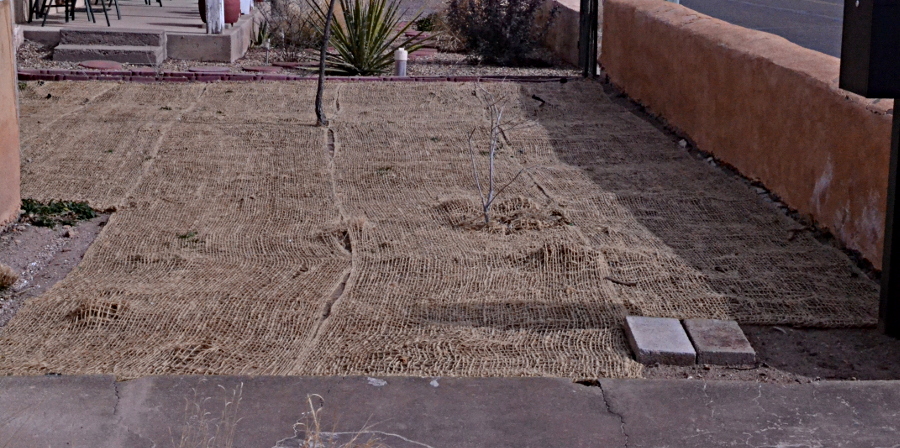
Almost 2 years ago, I covered the front yard with jute mesh to keep the grass seeds from blowing away or drying out. It worked as intended, but it's taking longer than I expected to degrade.

The mesh in the dryer areas of the yard (where the grass is thinnest) is still quite strong. The mesh where the grass was thickest has almost completely vanished. In a wetter climate, or if I had watered the grass more, it would have all vanished by now.

Raking the leaves this spring was tricky because the mesh was still strong enough to snag the rake tines. This winter the mesh is there, but although it looks intact it has most of its strength. I raked up small shreds and an occasional tangle of strings as I raked the dead grass and leaves.
The last of the erosion control cloth
 I'm tossing leaves, mesh and dead grass into the compost bins. By this time next year they will be ready for adding to the vegetable garden’s raised beds.


Read more!

Friday, June 16, 2017

Flowers! And Bugs!

Enough of construction and problem solving!  I have flowers to brag about ... Russian sage, hollyhocks, penstemons and gaillardia blooming between my patio and the fence in a gaudy mess.  
This is the traditional New Mexico style flower garden, where you plant a lot of things and let them fight for room. My long term plan is to extend this planting along the fence to the right, as time and available compost permit.

The Russian sage has dozens of bees, and an occasional butterfly.  These cream or white ones with spots are common.  An orange sherbet colored one taunts me and dodges the camera.
 

And on another wall, Zebra hollyhocks (Malva sylvestris) in a small planting area between patio and barbecue grill. There are also gaura and salvia for the hummingbirds.
 
Read more!

Monday, May 29, 2017

Watching Grass Grow: Buffalo 2.0 Update

Just a quick update on establishing the buffalo and blue grama lawn. It looked like this in early February, right after I spread the jute mesh and scattered the seeds.
February 2, 2017
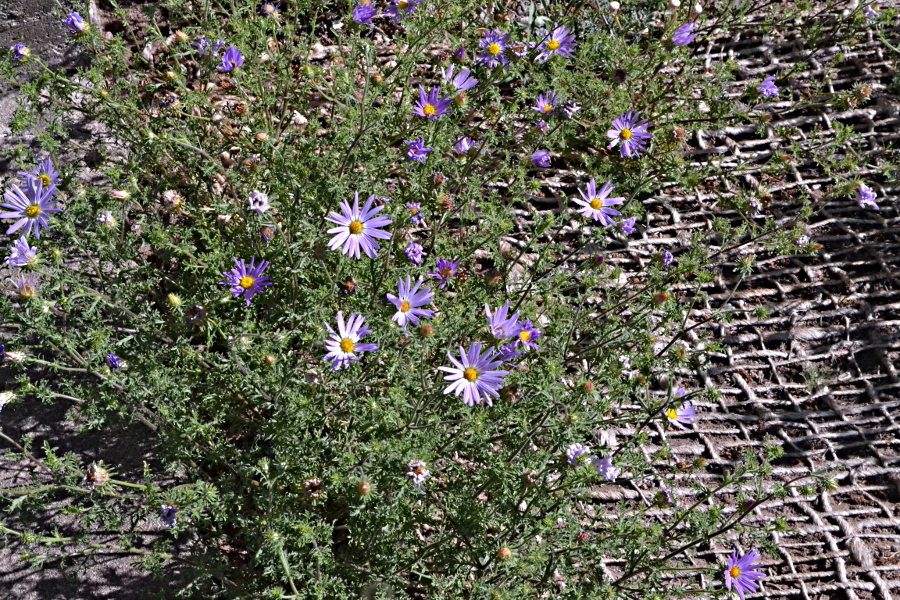
After way too much weeding and daily hand watering, by late May I had grass and an enthusiastic crop of native wildflowers.  Two annuals -  Tahoka daisy (Machaeranthera tanacetifolia) and sunflowers - are the main ones now. The perennial species are still very small.
May 27th
The daisies were not deliberately planted. They blew in from somewhere and I decided to keep them. They have a long bloom period, reseed easily, and attract a small white butterfly.
Tahoka Daisy
The native grasses don't grow very tall at first. They are establishing roots. When the summer rains come, I expect to see the buffalo grass sending out runners and the blue grama bunches get taller.
Tufts of grass
Read more!

Thursday, February 23, 2017

Jute Erosion Mesh As a Seed Cover

Lawn Upholstering? 

Jute erosion control mesh is not burlap - it's a fabric woven with extremely coarse yarn and large holes.  The mesh is commonly used for erosion control along new road construction while grasses and shrubs are being established. It is biodegradable, and within a couple of years, maybe more in a dry area, will decay and turn into organic material in the soil.

I'm using it like a mulch to protect newly scattered buffalo and blue grama grass seed and native wildflower mix. It should prevent my seeds from blowing away, discourage seed-eating birds and hold moisture.  It is definitely weed-free, which my compost is not.  It supposedly decomposes in a couple of years, so I will write more than this post about how it works.
Upholstered Lawn

It does look like I carpeted the lawn, and the neighbors are looking at me funny.
Read more!

Wednesday, February 15, 2017

Watching Grass Grow: The Return of the Buffalo

We had heat-tolerant buffalo grass in Phoenix and loved the low maintenance and toughness of it.  The landscape plan in New Mexico includes a xeriscape "meadow" of grasses and wildflowers.  Instead of the plugs, I'm using seeds of a buffalo grass variety better adapted for high desert, mixed with blue grama grass and a small number of other native grasses for accents.
Buffalo cow and calf enjoying a stroll in Yellowstone National Park

The front yard was mostly neglected bare dirt. After the visible weeds were killed off, the seeds were scattered over the bare dirt and covered with jute erosion control mesh as a mulch to keep the seed from blowing all the way to El Paso. When the weather warms up, I'll be watering every few days until the grass is established. I'll also be pulling weeds.

Seed Sources

Western Native Seed of Coaldale Colorado
Xeriscape Lawn Mix, 70% buffalo grass/30% blue grama grass
Because the grama grass seeds are smaller than the buffalo grass, it's probably equal quantities of each seed.
Xeriscape Wildflower Mix  A whole bunch of stuff in this.

Prairie Moon Nursery was the source for some of the accent grasses and wildflowers. I'll be writing about them later.  I put about half of the grasses from prairie Moon into the main lawn mix and the rest will be planted as drifts or specimens

Also, I had grass and flower seed collected from along the roads here that I blended into the grass or flower seeds before scattering them. It will be interesting to see what grows. Read more!

Sunday, January 29, 2017

The problem with USDA Plant Hardiness Zones

Any system that puts Phoenix, Arizona and Orlando, Florida together has a serious flaw.  But they are both USDA Hardiness Zone 10.
"USDA Plant Hardiness Zone Map is the standard by which gardeners and growers can determine which plants are most likely to thrive at a location. The map is based on the average annual minimum winter temperature, divided into 10-degree F zones."
What it really means:  The USDA Plant Hardiness Zone Map helps determine which plants are unlikely to die of cold weather at a location, not thrive.   There are many other reasons your location will kill unsuitable plants.  The picture below shows part of the problem.
Both city parks are in USDA Hardiness Zone 10


Read more!